QA Ticket Resolution Log 8 / 8 RESOLVED
Ticket submitted by sandmanfan (Discord) · 2026-06-11 · levels 2 / 2a / 2b · fixes authored autonomously by Claude (Fable 5) via Claude Code · live demo: exentt.com/jn-engine · next ticket: 2026-06-11 #2 (12 reports, level 1)
This page documents, line item by line item, how an 8-report QA ticket against the jn-engine JNBG reimplementation was diagnosed and fixed. Each card shows the report as filed, a screenshot from the deprecated engine build that contained the flaw, the evidence trail that located the root cause, the fix, and the same camera shot from the fixed engine. The ticket was filed in-game with the engine's QA annotate tool (B-key picker → markdown/JSON export), which records entity FourCC, class tag, asset reference and world position — those positions were reused verbatim to aim the before/after cameras below.
The Ticket
| # | level | entity | class | cat. | report |
|---|---|---|---|---|---|
| 1 | level2 | 3DIN | C3DDINO | MIS | model is GEP instead of dino. texture is correct. same applies in level2b |
| 2 | level2 | 3SBU | C3DBUS | TEX | texture is retroland shuttle instead of school bus. same applies in level2b |
| 3 | level2 | 3FIS | C3DDARWINFISH | MIS | in general, darwins use what seems to be a level editor model instead of the real one |
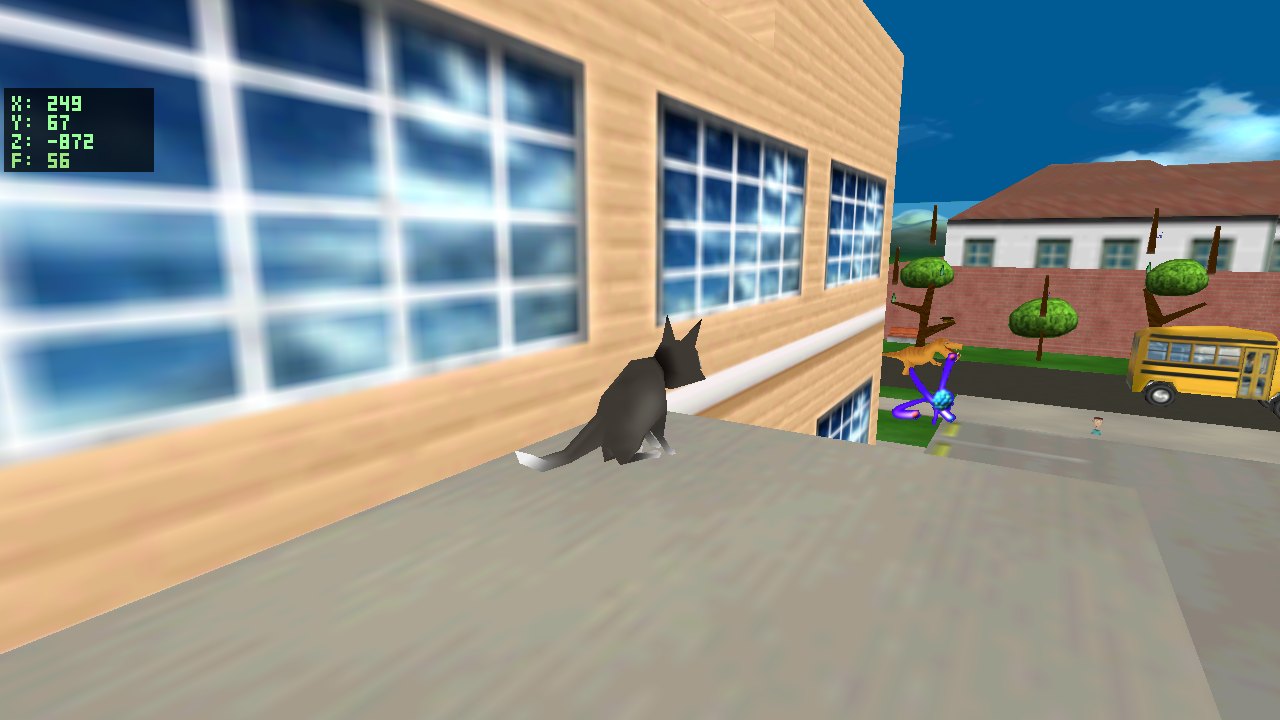
| 4 | level2 | 3PIC | kitty | MIS | missing cat ASE |
| 5 | level2 | 3BAL | C3DBALLOON | TEX | missing balloon sprite for every 3BAL entity. also look into what makes them different colors, as its white by default. |
| 6 | level2b | 3CON | C3DCONE | TEX | texture is piggybank instead of cone for all entities. same applies in level2 |
| 7 | level2b | START | placement | TEX | banner doesn't display "Nick's Finish Line". same applies in level2 |
| 8 | level2b | 3CHK | check1a | TEX | checkpoint should be crossed flags sprite and not the JNvJN clock. same applies in level2a |
MIS = wrong/missing model · TEX = wrong/missing texture. Six of eight items resolved in
src/game/entity_visual.c (the entity→visual resolver); item 7 turned out to be a renderer-level
D3D7↔OpenGL semantics mismatch. Items 5, 6 and 8 share a single root cause.
1 · 3DIN — wrong dino model MIS
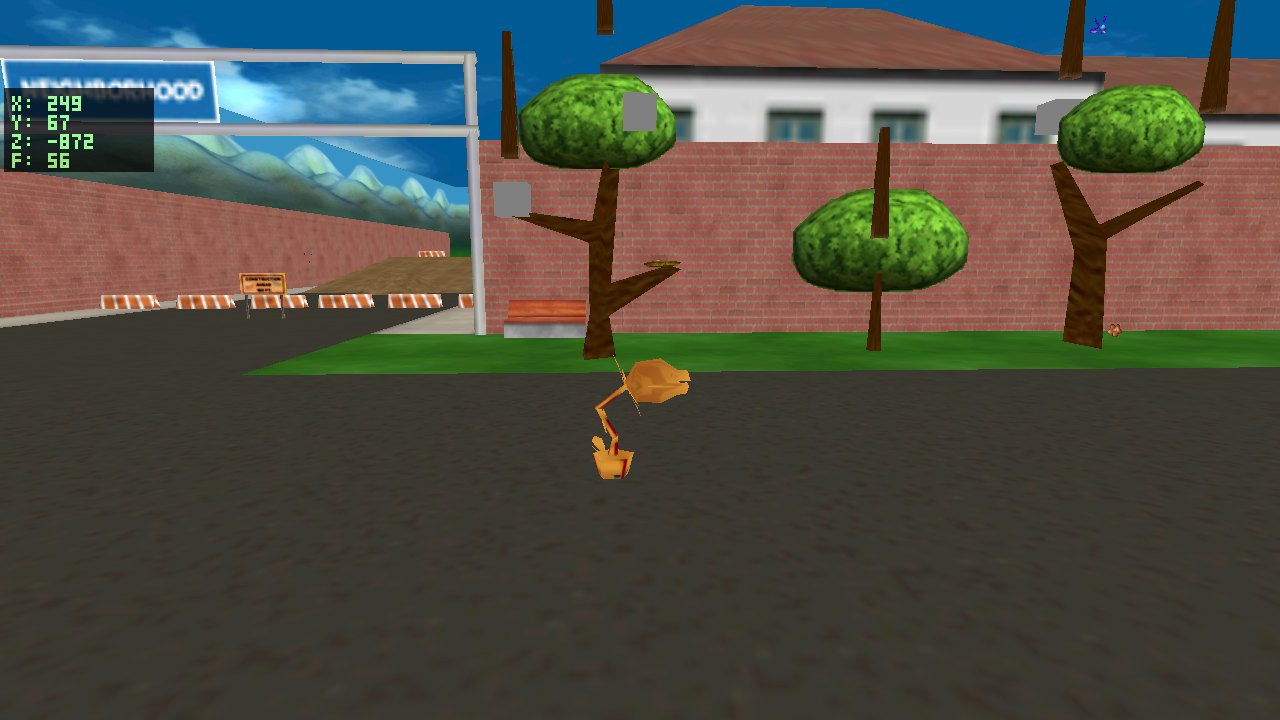
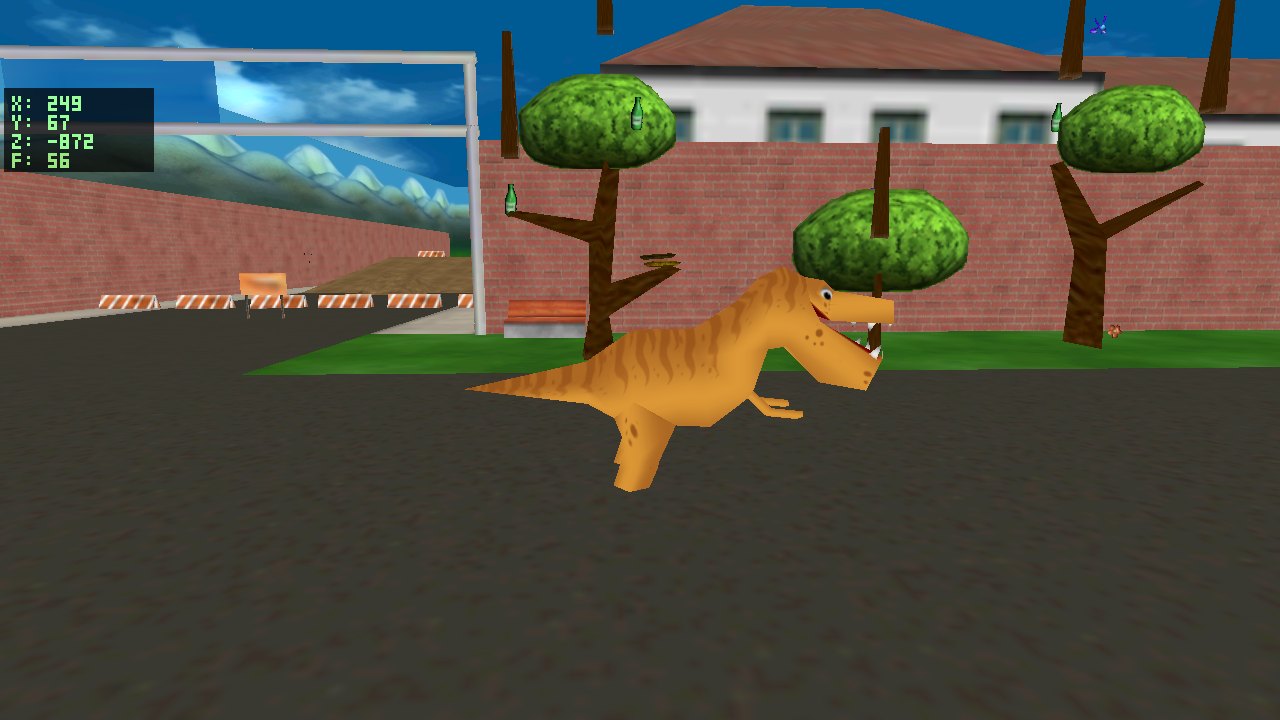
The resolver row pointed at assets/ase/omt/dino.ASE — a mesh that happens to be named
"dino" inside the objects.omt container (a level prop, not the character). The ground truth was already
on disk: the Ghidra-derived decomp spec docs/decomp/C3DDino.md captures the class's
InitObject verbatim:
(**(code **)(puVar1 + 0xd8))(s_HIWALK,   s_dinowalk_ase);
(**(code **)(this->vftable + 0xd8))(s_HISHRINK, s_dinoshrink_ASE);
(**(code **)(this->vftable + 0xd8))(s_HISTOP,  s_dinostop_ase);
(**(code **)(this->vftable + 0xf0))(s_dino_png, 0);
The class registers dinostop.ase (+walk/shrink anims) and loads dino.png —
both already extracted from the original install. One ls confirmed they exist.
{ "3DIN", { "assets/ase/dinostop.ASE", "assets/png/dino.png" } }2 · 3SBU — shuttle texture instead of school bus TEX
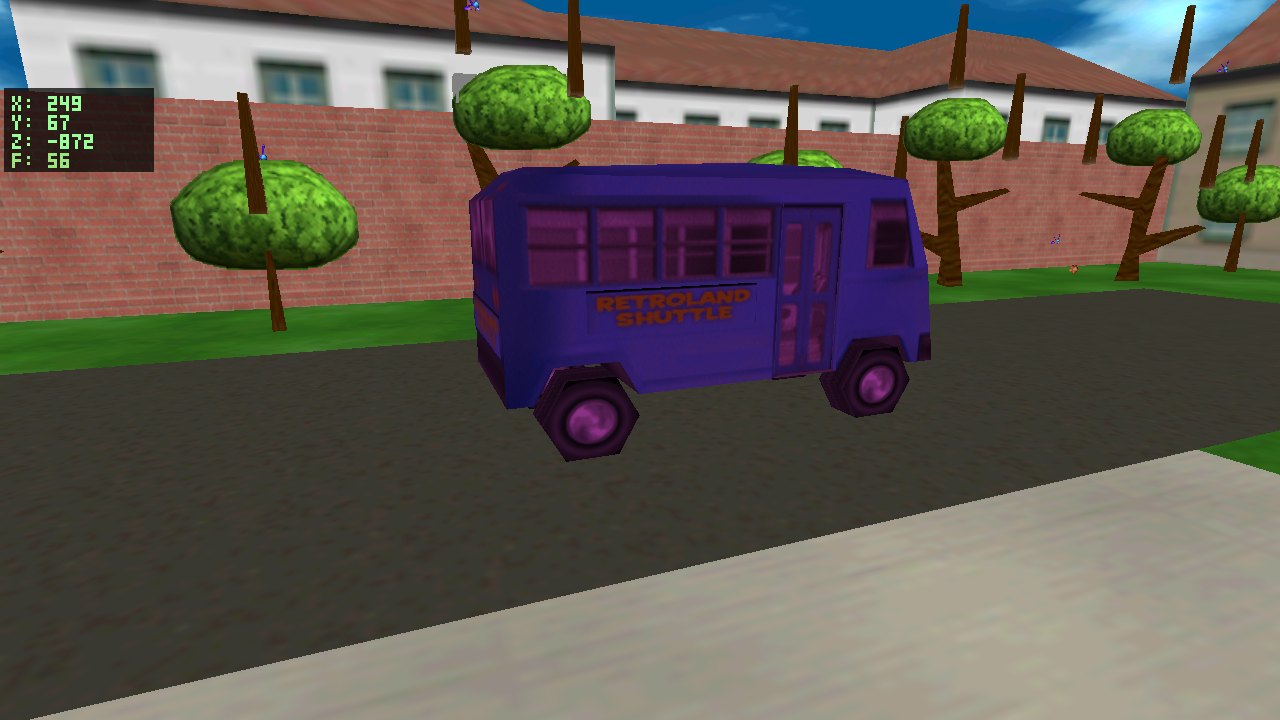
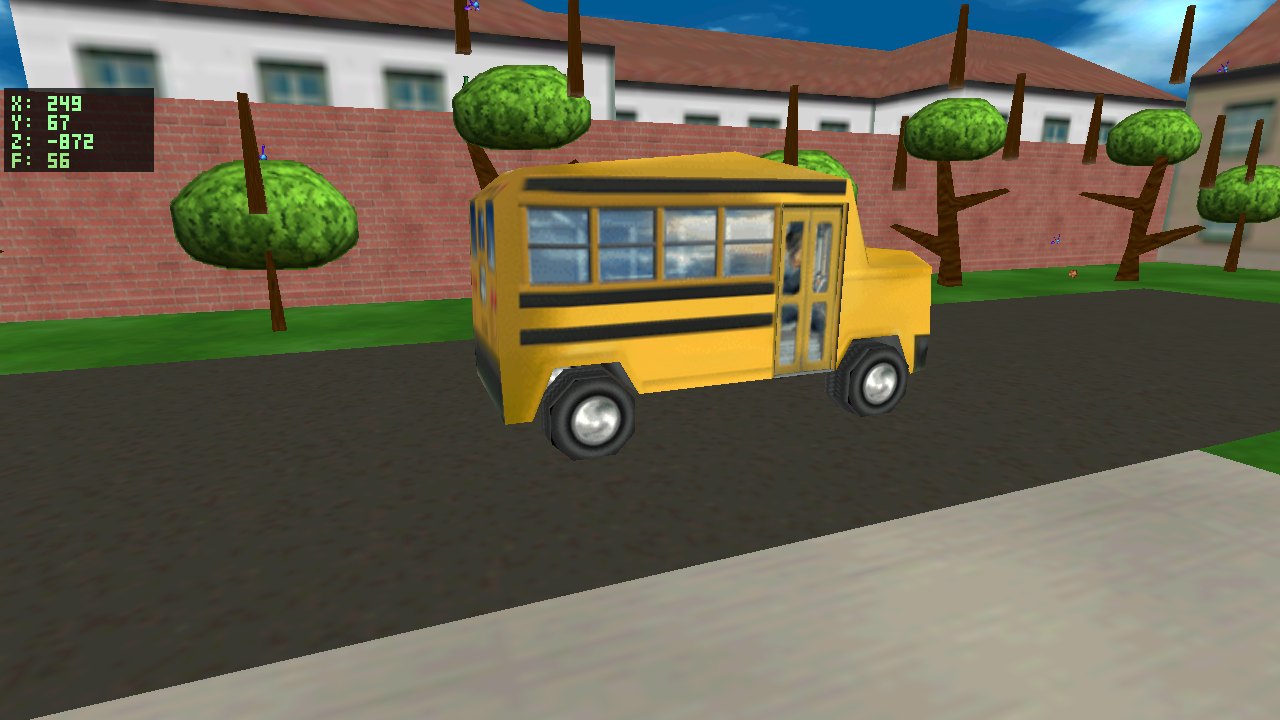
Both bus meshes ship in the original install; the resolver had picked the wrong one. Their ASE material blocks distinguish them instantly:
bus.ASE:      *BITMAP "D:\neutron\run\png\bus.png"        ← school bus
retrobus.ASE: *BITMAP "D:\Jimmy\busretro.bmp"             ← Retroland shuttle
docs/decomp/C3DBus.md settles it from the binary itself: C3DBus's lazy visual loader
"registers HIDEFAULT → bus.ase, loads bus.png into texture slot 0".
{ "3SBU", { "assets/ase/bus.ASE", "assets/png/bus.png" } }3 · 3FIS — Darwin uses a level-editor model MIS
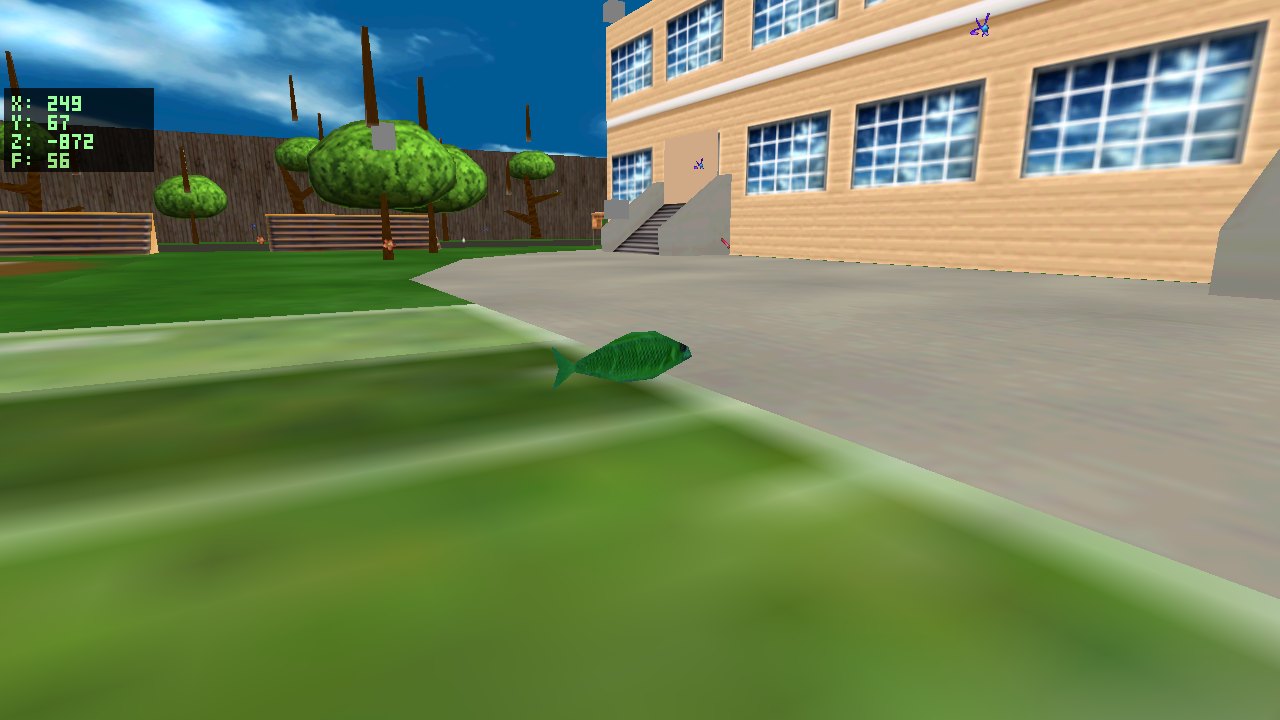
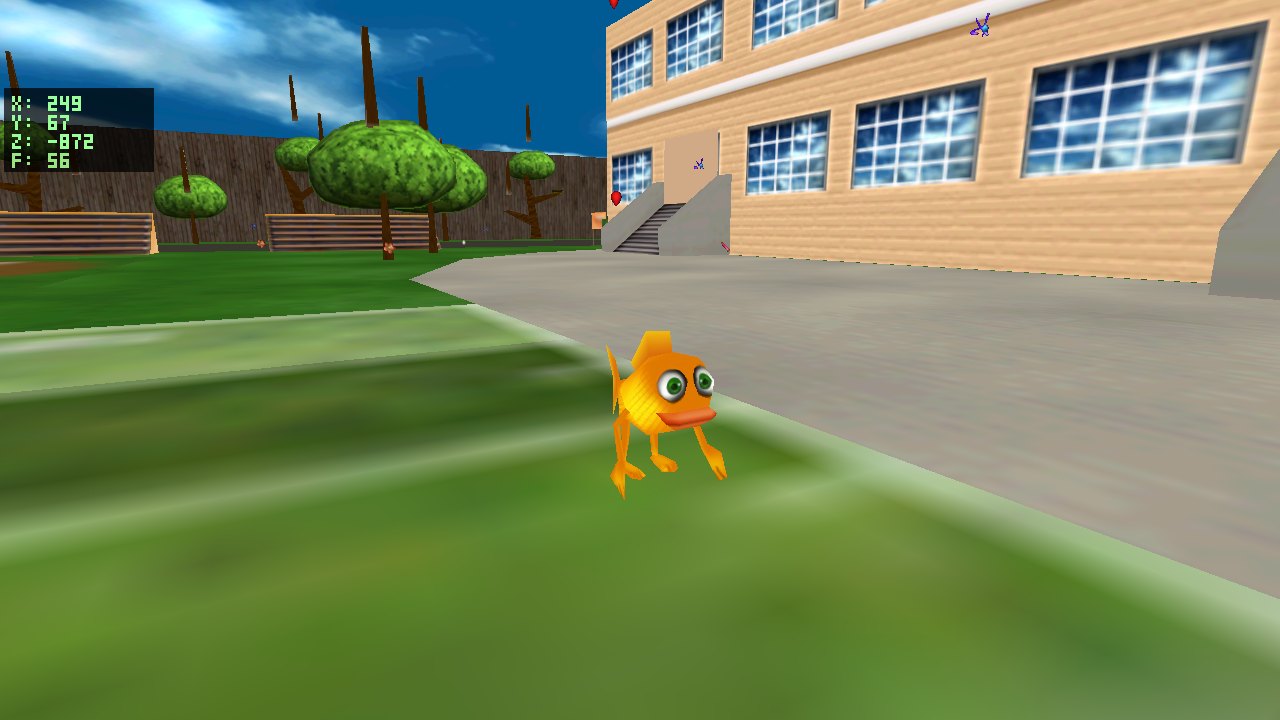
The reporter's "level editor model" instinct was exactly right — the bound mesh's own material path betrays its origin as a 3D-items pickup asset, not a character:
fish2.ASE: *BITMAP "D:\Jimmy (ken)\3D Items (pick up)\bmp\fish3.bmp"
docs/decomp/C3DDarwinFish.md shows the class registering
darwinwalk.ase / darwinshrink.ASE / darwinstop.ase and loading darwin.png —
the same registration pattern as the dino (the two classes share their decompiled InitObject shape).
{ "3FIS", { "assets/ase/darwinstop.ASE", "assets/png/darwin.png" } }4 · 3PIC "kitty" — missing cat MIS
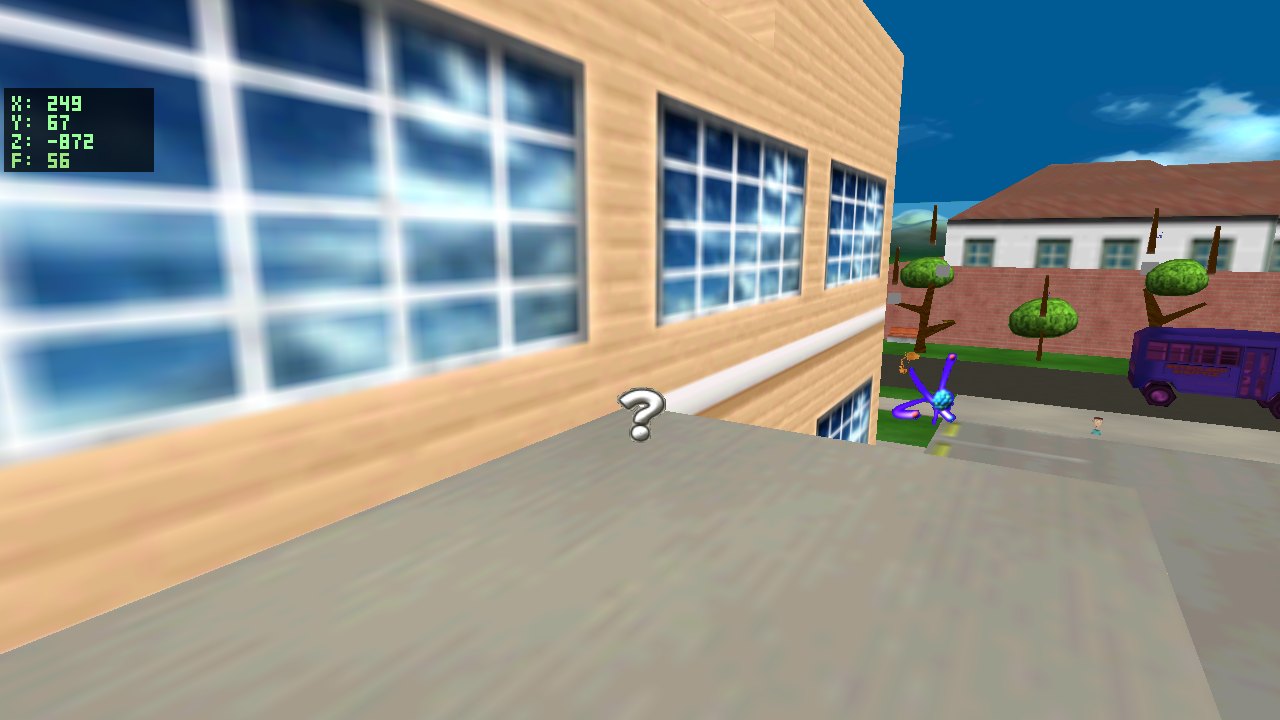
This one had two layers. First, the resolver had no per-tag row for "kitty", so it should have fallen
to a generic pickup. But the engine logs showed no cat mesh ever loading — because 3PIC entities with an
authored SpriteIndex > 0 take a separate billboard shortcut. Decoding what that index
actually points at explained the mystery floating "?":

hidden: the original level editor's "hidden object" placeholderThe original game never renders this marker — the kitty pickup (the level's rescue-the-cat objective)
shows the cat itself. docs/decomp/C3DKitty.md confirms cat animations + cat.png.
{ "3PIC", "kitty", { "assets/ase/catsit.ASE", "assets/png/cat.png" } }, plus a new
entity_visual_tag_override() check so curated tag visuals take precedence over the
SpriteIndex billboard shortcut.5 · 3BAL — white balloons / missing sprite + colors TEX
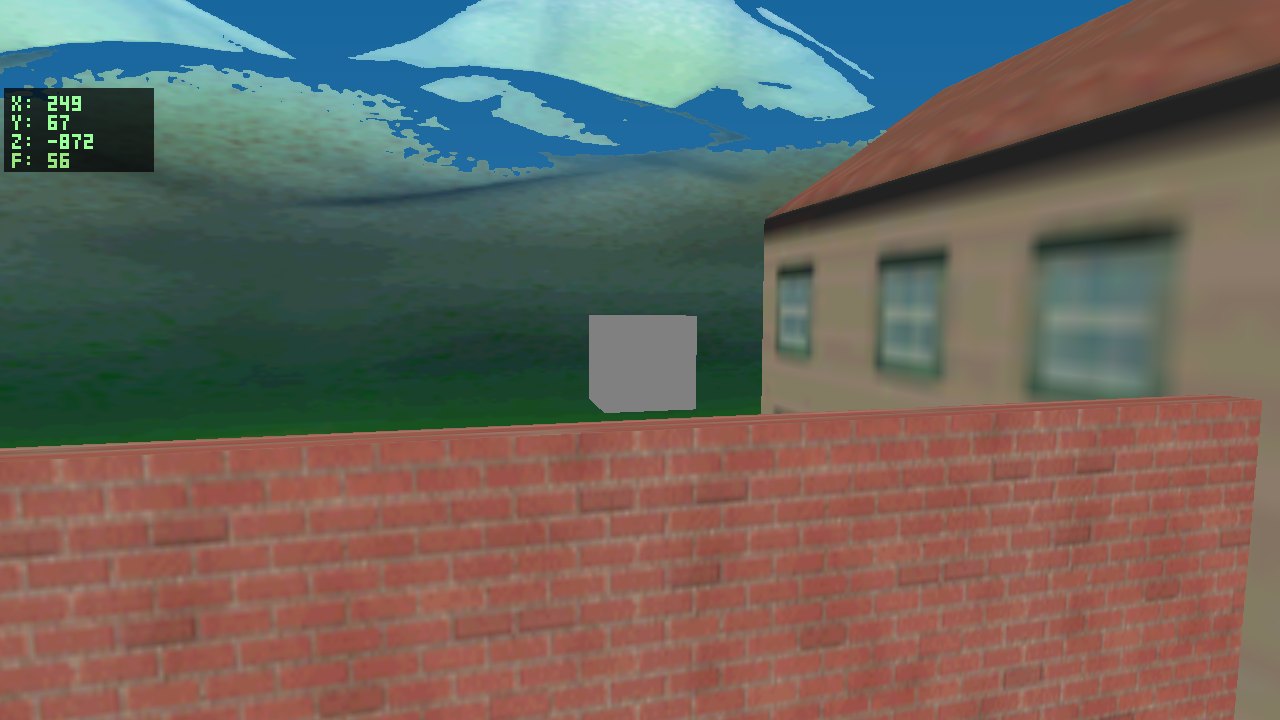
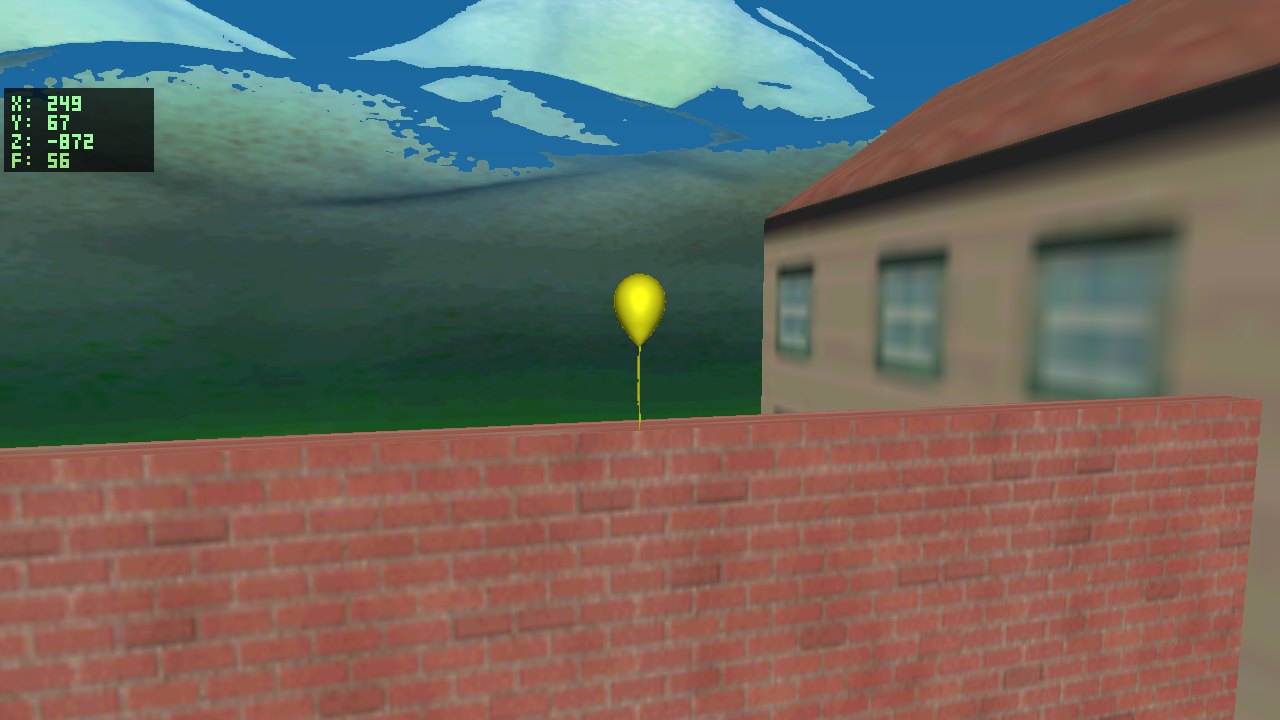
Bug A (white quad): the resolver row hardcoded
0050_32x32d32.png — an image-file ordinal from an older interpretation of SpriteIndex.
That file doesn't exist (texture load fails → white). The generated sprite-chunk map, built after the
SpriteIndex = canvas-chunk-id discovery, already had the right answer:
{ "sprites.omt", 50, ".../0071_128x128d32.png" }, /* balloon */

balloon canvasBug B (colors): a hex dump of a 3BAL record in Level2.gam revealed three
unparsed per-instance float properties:
Red   ... 3f000000  = 0.5      (big-endian float)
Green ... 3dcccccd  = 0.1
Blue  ... 3f800000  = 1.0
docs/decomp/C3DBalloon.md (measured from the binary) documents exactly where they go:
"Adjusted canvas/material color record set to (Red, Green, Blue, 0.8)". That's what makes
each balloon a different color — the engine just wasn't reading them.
Red/Green/Blue from the entity's property bag and applies them as an (R, G, B, 0.8) tint.6 · 3CON — piggybank instead of cone TEX
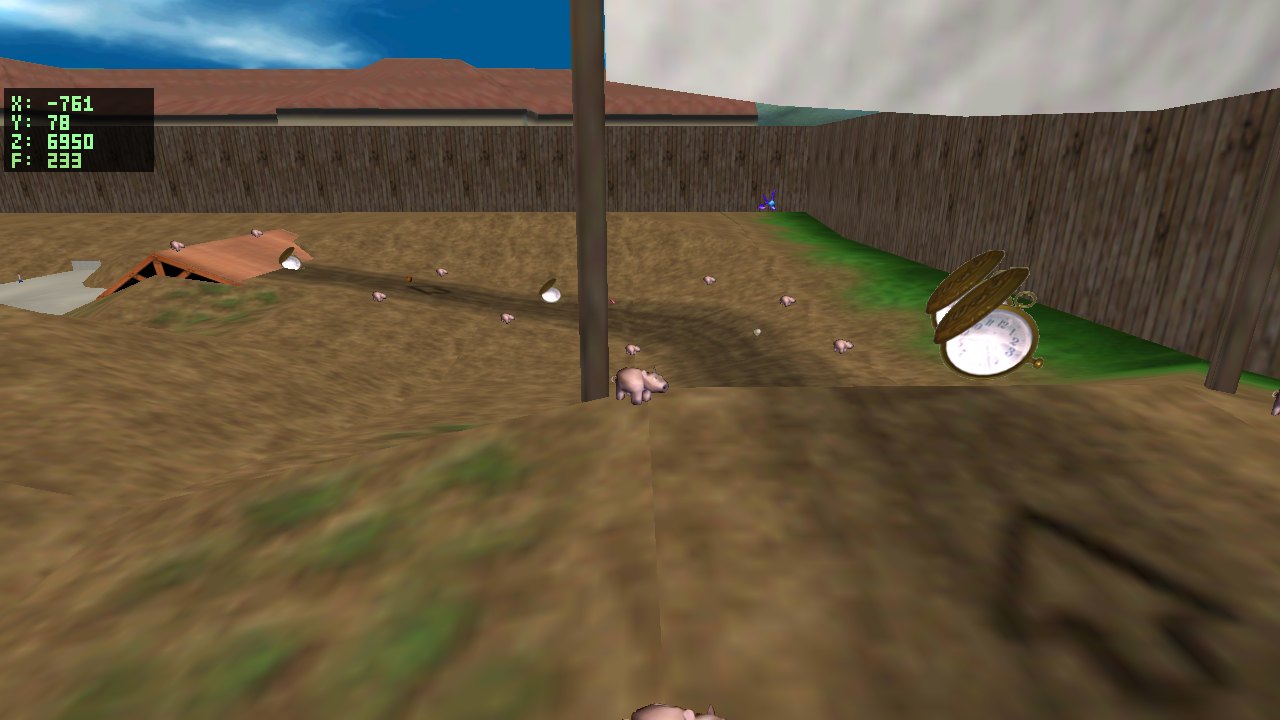
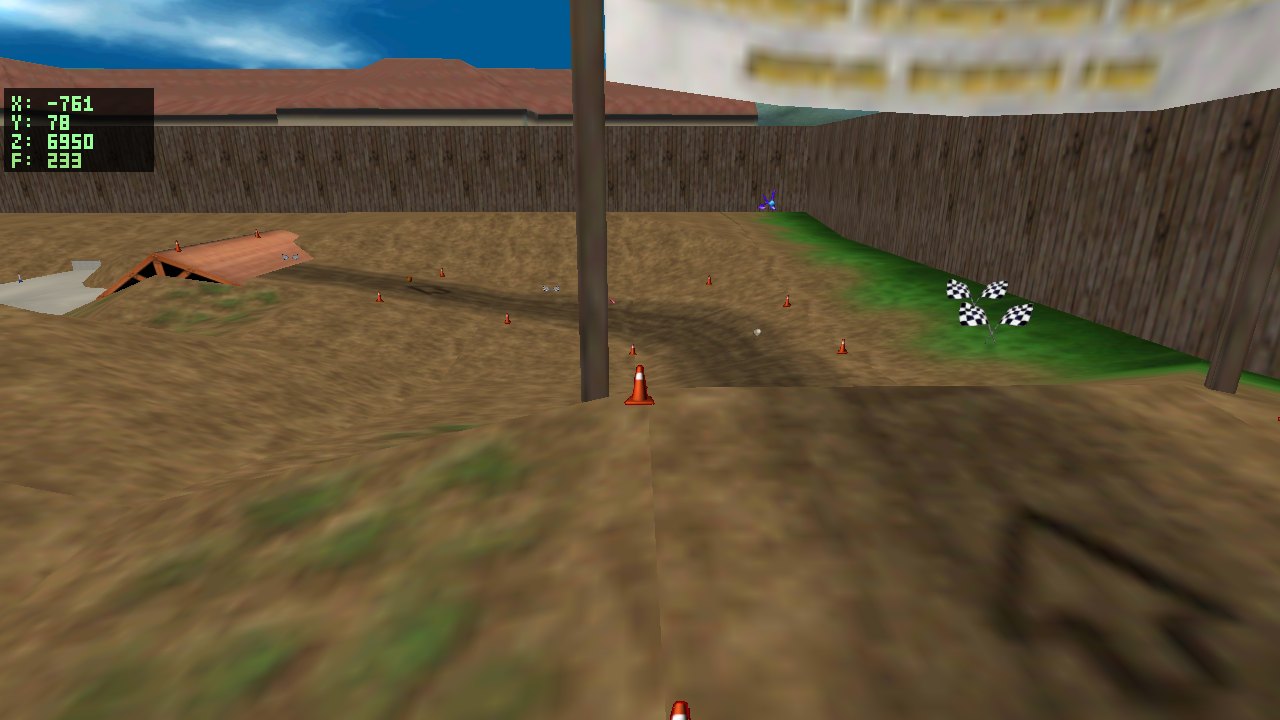
Same root cause as the balloons, but this time the wrong file existed — which is why it rendered
a piggybank rather than white. The stale row referenced image file 0041_…png; cross-checking the
generated chunk map showed file 0041 actually belongs to canvas chunk 160:
{ "sprites.omt", 160, ".../0041_128x128d16.png" },  /* piggybank  ← what the row pointed at */
{ "sprites.omt",  41, ".../0062_64x64d32.png"  },  /* cone       ← what chunk 41 really is  */


A file-ordinal ↔ chunk-id collision: for low ids the two numbering schemes coincide (which is why older sprite rows worked), and they diverge exactly where this ticket found bugs. A third stale row (3LEA, leaves) was caught and fixed in the same sweep before anyone reported it.
7 · START — banner doesn't display "Nick's Finish Line" TEX
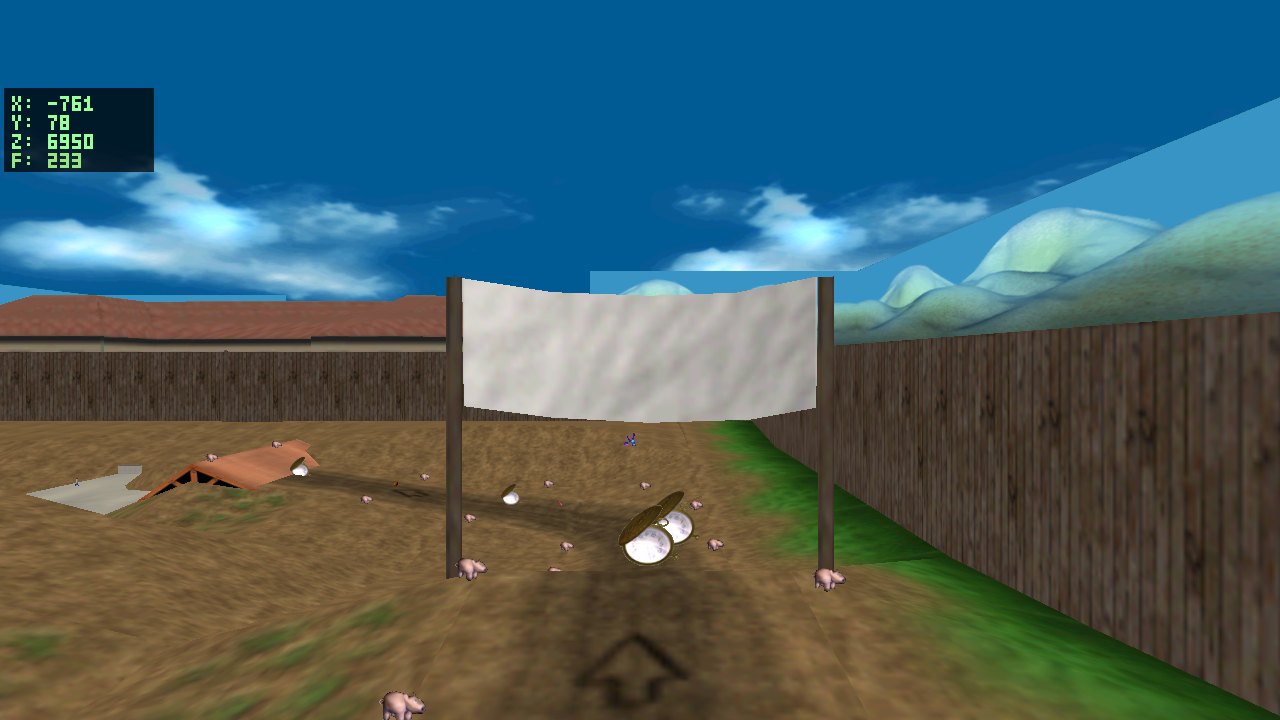
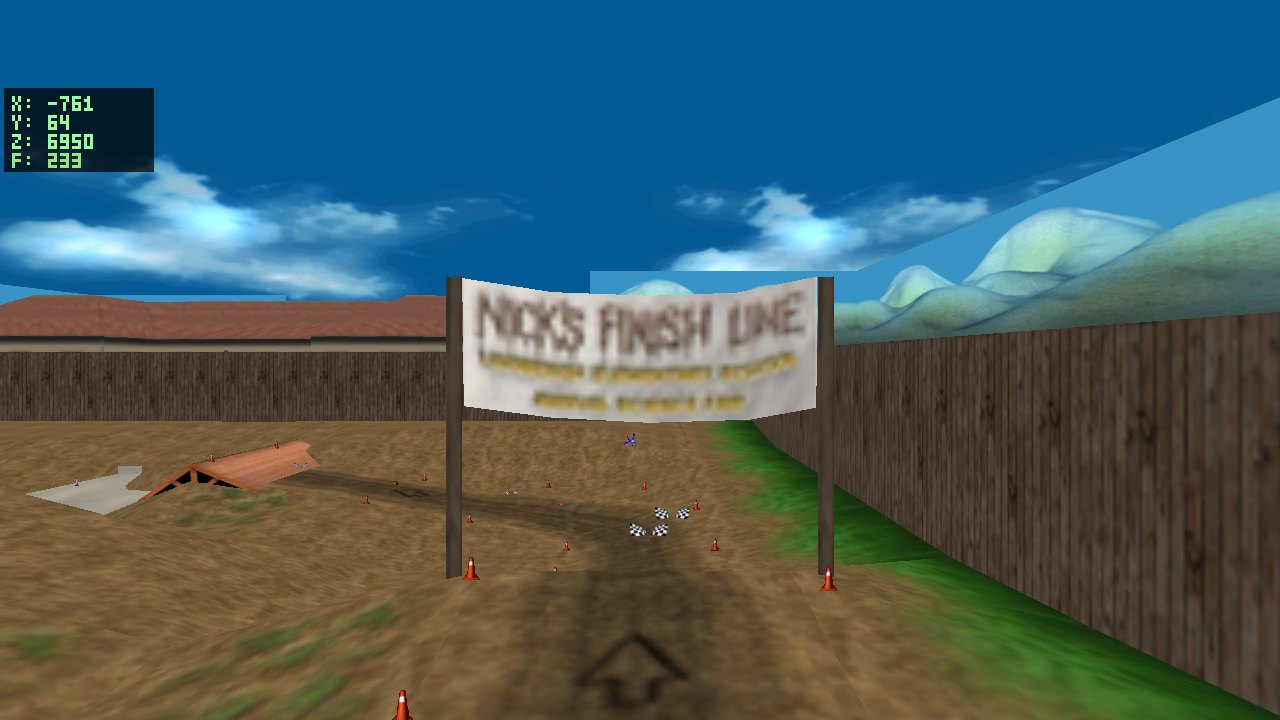
The hardest item — every layer of the asset pipeline checked out clean, one by one: the banner texture parses correctly from the level container; the exported GLB embeds it on the right faces (verified by decoding the mesh's triangles + materials directly); the GLB loader uploads one GL texture per material group; the placement draw path passes no overrides; culling is off. The data was provably perfect:

finish canvas, parsed from level2b.omt — text intactWith the asset exonerated, the suspect had to be runtime state. A raw view/projection camera descriptor was crafted to frame the sign headless — it rendered textured cloth with no text. Dumping the banner primitive's UVs exposed the trick: the banner is two co-planar quads at identical depth — triangles 0–7 sample the blank-cloth band of the texture, triangles 8–15 (drawn second) sample the text band:
tri  0  cloth  v= [-0.55 -0.20 -0.54]      tri  8  TEXT  v= [-0.65 -1.00 -0.99]
tri  1  cloth  v= [-0.20 -0.22 -0.54]      tri  9  TEXT  v= [-0.67 -0.65 -0.99]
...                                         ...      (same positions, same depth)
That's a decal pattern that only works under Direct3D 7's default depth test,
D3DCMP_LESSEQUAL — equal-depth fragments pass, so the later text layer wins. OpenGL defaults to
GL_LESS — equal-depth fragments fail, so the text layer could never draw a single pixel.
The engine had simply never set a depth function.
glDepthFunc(GL_LEQUAL) at renderer init (matching the
D3D7 default the original game ran under), plus adding the symbol to the engine's minimal GL loader.
This is a faithfulness fix at the renderer level: any other co-planar decal layering in the original data
now resolves the same way it did in 2001.8 · 3CHK — JNvsJN clock instead of crossed flags TEX
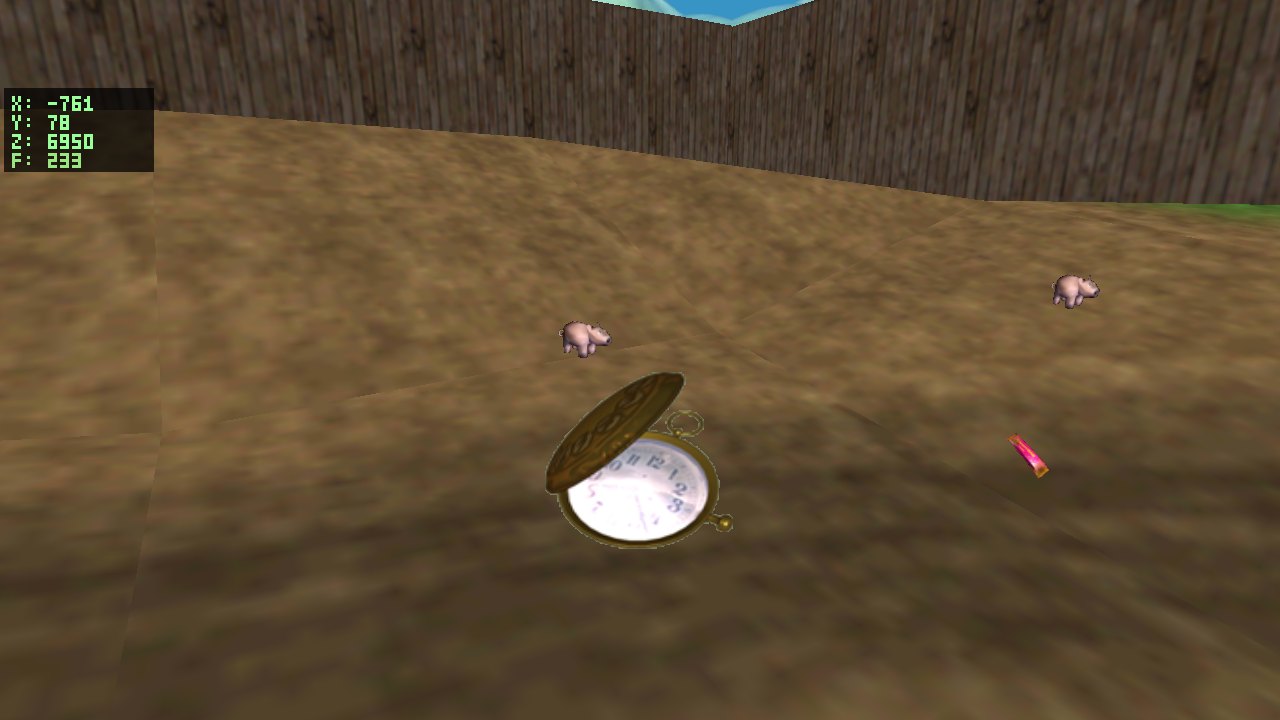
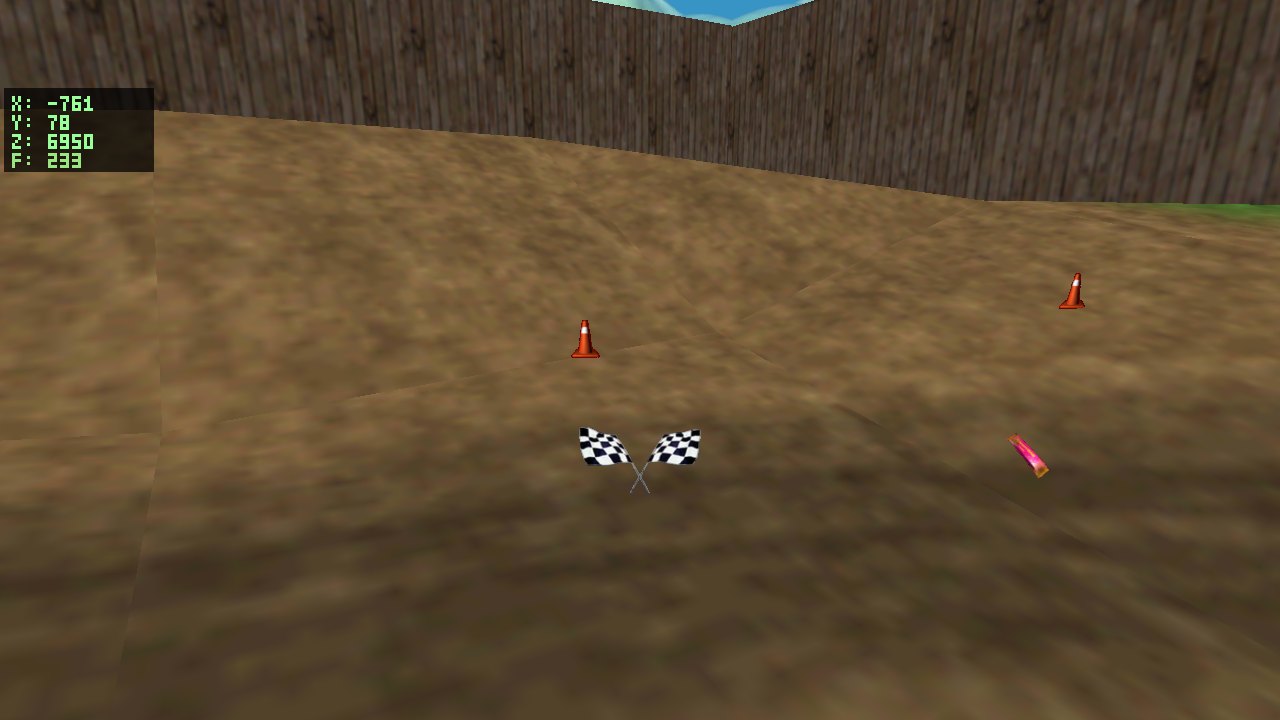
The engine runs two games (JNBG and its sequel JN vs JN), and the checkpoint visual was a single
hard-coded row pointing at the sequel's clock sprite for both. But the QA export itself contained
the answer: the JNBG .gam authors SpriteIndex 42 on every checkpoint, and chunk 42
in sprites.omt is a canvas named — literally — flag:

spr_checkpoint (what rendered)
How These Were Resolved — Process Notes
All eight items were diagnosed and fixed in a single session by Claude (Fable 5) running in Claude Code on the project box, with no human-written code. The general loop:
- Ticket → resolver: the QA export's FourCC + tag + asset fields point directly into
entity_visual.c; five reports were table-row inspections from there. - Ground truth lookup: for each suspect class, the repo's Ghidra-derived decomp specs
(
docs/decomp/C3D*.md) state which assets the original binary registers — four items were settled by reading them, no new reverse engineering needed. - Artifact decoding: sprite/canvas questions were answered by decoding the original containers (sprites.omt chunk map, .gam hex dumps, GLB triangle/UV dumps) rather than guessing.
- Headless verification: every fix was confirmed by aiming a camera at the reported world position and screenshotting the native engine — the same harness that produced every image on this page.
Efficiency Takeaways
- Three reports, one bug. Items 5, 6 and 8 (and an unreported 3LEA case) all traced to sprite rows written before the SpriteIndex=chunk-id discovery. When a data-interpretation discovery like that lands, sweeping all existing consumers of the old interpretation would have prevented three of eight tickets.
- Decomp docs are the highest-leverage artifact. Items 1, 2, 3 and 5's color logic were
answered in minutes because
docs/decomp/already recorded each class's measured asset bindings. A lint that cross-checks resolver rows against decomp-doc asset references could catch mismatches before QA ever sees them. - Reported coordinates should drive cameras automatically. The before/after shots here were produced by generating raw view/proj descriptors from the ticket's own positions. Folding that into the QA tool ("screenshot every reported position, before and after") would make regression evidence free.
- API-default mismatches are a class, not an incident. The depth-function bug joins a known family (UV V-flip, Z-handedness, alpha-test defaults, D3D vs GL conventions). Auditing the remaining D3D7 render-state defaults against GL state at renderer init is cheap insurance.
- The reporter's instincts were data. "Seems like a level editor model" (item 3) and "look into what makes them different colors" (item 5) both pointed at the exact root cause. QA phrasing is evidence.